What Is PMOS? What to Know About the New Name for PCOS
If you’ve been diagnosed with PCOS, you may start hearing a new name for it: PMOS, which stands for Polyendocrine Metabolic Ovarian Syndrome. That’s a mouthful, I know.
For years, PCOS has stood for Polycystic Ovary Syndrome, but the name has never been especially accurate. It made the condition sound like it was mainly about ovarian cysts, when in reality, PCOS has always been much more complex than that.
PMOS is the new name being used to better describe what’s actually going on: a hormonal, metabolic, and reproductive condition that can affect multiple systems in the body.
If you’re feeling confused, you’re not alone. The name is changing, but the condition itself didn’t suddenly become something different overnight. This post will walk through what PMOS means, why the name changed, and what it may mean for your care.
What is PMOS?
PMOS stands for Polyendocrine Metabolic Ovarian Syndrome. It’s the new name for what has historically been called PCOS, or Polycystic Ovary Syndrome. The updated name is meant to reflect that this condition involves more than the ovaries.
Let’s break the name down:
Polyendocrine means more than one hormone-related system may be involved.
Metabolic points to the way PMOS can affect insulin, blood sugar, cholesterol, inflammation, and long-term metabolic health.
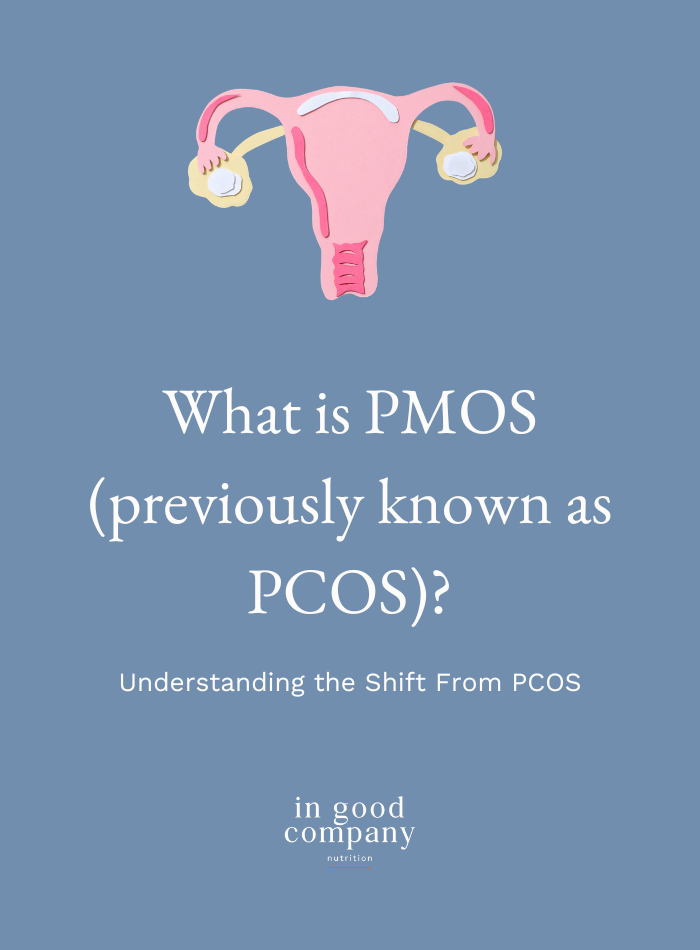
Ovarian acknowledges that the ovaries can still be part of the picture, especially when it comes to ovulation, menstrual cycles, and fertility.
Syndrome means it’s a collection of signs, symptoms, and patterns rather than one single lab value or symptom.
In plain language, PMOS is a hormonal and metabolic condition that may show up through irregular periods, signs of higher androgens, insulin resistance, acne, hair growth, hair thinning, fertility challenges, and other symptoms. Not everyone has the same experience, and not everyone has every symptom.
Why did PCOS get renamed PMOS?
PCOS was renamed PMOS because the old name was misleading.
The phrase “polycystic ovary syndrome” made it sound like ovarian cysts were the central feature of the condition. But many people with PCOS don’t have cysts. Some people have polycystic-appearing ovaries on ultrasound but don’t have PCOS. And the “cysts” themselves aren’t actually cysts in the way many people imagine them. They’re often small follicles related to ovulation patterns.
So the name created confusion for both patients and providers.
Someone might hear “polycystic ovaries” and think:
“I must have cysts.”
“If my ultrasound is normal, I can’t have PCOS.”
“This is only a fertility issue.”
“This is only about my ovaries.”
“This doesn’t matter unless I’m trying to get pregnant.”
But none of that fully captures the condition. PCOS, now PMOS, can affect hormones, ovulation, skin, hair, insulin, metabolic health, energy, mood, sleep, and body image. A name focused mainly on “cysts” didn’t do a great job of communicating that.
Does PMOS mean something different from PCOS?
For most people, PMOS and PCOS are referring to the same condition.
The name changed to better describe the condition, but your diagnosis didn’t disappear. If you were diagnosed with PCOS, you may now see it called PMOS in newer resources, medical conversations, or educational materials.
There will likely be a transition period where both names are used. Your medical records may still say PCOS, your doctor may still say PCOS. Insurance systems, lab orders, and patient portals may take time to catch up.
For now, it’s completely reasonable to use both terms: PMOS, formerly known as PCOS.
That’s also probably what you’ll see in a lot of health writing for a while, because many people are still searching for PCOS and may not have heard of PMOS yet.
Why “polycystic ovaries” was always a confusing term
One of the most frustrating things about PCOS is that the name often made people feel like their diagnosis did or didn’t “count” based on an ultrasound. But PCOS has never been about cysts.
Many people meet criteria for PCOS without polycystic-appearing ovaries, while others may have polycystic-appearing ovaries but not meet criteria for PCOS. This is a big part of why the old name caused so much confusion.
The condition is usually understood through a combination of patterns, which may include:
Irregular or absent ovulation
Irregular, infrequent, or absent periods
Clinical or lab signs of higher androgens
Acne, increased facial or body hair growth, or scalp hair thinning
Polycystic-appearing ovaries on ultrasound
Insulin resistance or related metabolic changes
Not everyone with PMOS has all of these.
A lot of people are dismissed when their symptoms don’t look like the stereotypical version of PCOS. Others are told they “probably have PCOS” without a full assessment, which can also be frustrating and unhelpful.
A more accurate name can’t fix every problem in medical care, but it may help shift the conversation away from “Do you have cysts?” and toward “What’s happening hormonally and metabolically?”
PMOS is not just a fertility condition
PMOS can affect ovulation and fertility, but it’s not only relevant when someone is trying to get pregnant.
This matters because many people with PCOS have been told to come back when they want to have a baby, while their current symptoms are brushed aside. Irregular periods, acne, hair changes, blood sugar concerns, fatigue, cravings, sleep issues, mood changes, and body image distress can affect someone’s life right now. PMOS deserves care even if pregnancy is not the goal.
You deserve support for symptoms that are affecting your day-to-day life. You deserve someone to look at the full picture instead of reducing the conversation to fertility, weight, or willpower.
PMOS is not caused by eating “wrong”
Because PMOS has metabolic features, nutrition often becomes part of the conversation. Unfortunately, that conversation can get very diet-culture-y very quickly. People with PCOS have often been told to lose weight, cut carbs, avoid sugar, give up dairy, go gluten-free, try keto, fast longer, eat cleaner, take a dozen supplements, and “balance their hormones” through perfect eating.
That kind of advice can be really overwhelming, especially if you already have a complicated relationship with food.
Nutrition can support PMOS, but it shouldn’t require fear, shame, or restriction. You don’t have to earn care by pursuing weight loss. You don’t have to cut out entire food groups to prove you’re taking your health seriously.
A non-diet approach to PMOS nutrition may focus on things like:
Eating consistently enough throughout the day
Pairing carbohydrates with protein, fat, and fiber when possible
Supporting blood sugar without demonizing carbs
Making meals more satisfying
Finding realistic options for low-energy days
Addressing cravings without shame
Supporting digestion, sleep, and energy
Reducing all-or-nothing thinking around food
Healing from past dieting or disordered eating patterns
This is especially important because many people with PCOS/PMOS have been exposed to weight-focused advice for years. For some, that advice has made food feel more stressful, not more supportive.
What symptoms are associated with PMOS?
PMOS can look different from person to person. Some people have very noticeable symptoms. Others only discover it after changes in their cycle, lab work, or fertility testing.
Possible symptoms and patterns may include:
Irregular periods
Long cycles
Missed periods
Difficulty ovulating
Acne
Increased facial or body hair growth
Scalp hair thinning
Oily skin
Insulin resistance
Blood sugar changes
Cravings or intense hunger
Fatigue
Sleep difficulties
Mood changes
Fertility challenges
Body image distress
Some people may also have related concerns like anxiety, depression, disordered eating, digestive symptoms, or a history of chronic dieting.
Symptoms like irregular periods, acne, hair changes, and fatigue can have multiple causes. PMOS is one possibility, but it’s not the only one. Thyroid conditions, hypothalamic amenorrhea, elevated prolactin, non-classic congenital adrenal hyperplasia, nutrient deficiencies, stress, under-eating, and other medical concerns may need to be considered too. That’s why a thorough medical assessment always matters.
How is PMOS diagnosed?
PMOS is diagnosed by a medical provider, often using a combination of menstrual history, symptoms, lab work, and sometimes ultrasound.
The exact criteria can depend on age, symptoms, and clinical context, but providers typically look at patterns related to ovulation, androgen levels, and ovarian appearance.
If you suspect PMOS, it may be helpful to ask your provider about:
Total and free testosterone
DHEA-S
Androstenedione, if appropriate
17-hydroxyprogesterone, when ruling out other causes
Prolactin
Thyroid labs
A1c
Fasting glucose and insulin, if clinically appropriate
Lipid panel
Ferritin
Vitamin D
B12, especially if taking metformin
This isn’t a checklist that every single person needs in the exact same way. It’s a starting point for a conversation with your clinician.
If you feel dismissed, it’s okay to ask questions like:
“What else are we ruling out?”
“Can you explain how I meet or don’t meet the criteria?”
“Are there other reasons my cycle could be irregular?”
“Can we look at metabolic markers beyond weight?”
“What are my options if weight loss is not something I’m pursuing?”
You’re allowed to understand your care.
What does PMOS mean for nutrition counseling?
PMOS nutrition counseling should not be a crash diet with a more medical-sounding name.
At In Good Company Nutrition, PMOS nutrition support is weight-inclusive, non-diet, and grounded in real life. That means we can talk about insulin resistance, blood sugar, labs, symptoms, and health without turning your body into a problem to solve.
Nutrition counseling might include support with:
Building more consistent meals and snacks
Understanding blood sugar in a non-shaming way
Navigating cravings and chaotic eating patterns
Eating enough, especially if you have a history of restriction
Making food easier with ADHD, stress, fatigue, or chronic illness
Sorting through supplement claims
Supporting digestion and energy
Advocating for better medical care
Repairing your relationship with food after years of dieting
For many people, the most helpful nutrition work isn’t about being stricter. It’s about creating more stability, more flexibility, and more trust with food.
The bottom line
PMOS is the new name for PCOS, and the change matters because the old name never told the full story. This condition isn’t just about ovarian cysts. It isn’t just about fertility. It isn’t caused by eating “wrong.” And it doesn’t have to be treated with shame-based diet advice.
PMOS is a hormonal and metabolic condition that deserves thoughtful, individualized care. If you’ve spent years feeling confused by your symptoms or overwhelmed by PCOS nutrition advice online, you’re not alone. You deserve support that looks at the whole picture and helps you care for your body without turning food into another source of fear.
Looking for non-diet PMOS nutrition support?
In Good Company Nutrition offers weight-inclusive nutrition counseling for adults navigating PMOS, formerly PCOS, along with disordered eating, ADHD nutrition, body image concerns, digestive symptoms, and chronic dieting.
If you’re looking for a gentler, more supportive way to approach PMOS nutrition, you can reach out to learn more about working together.