What to Expect When Working With a HAES-Aligned Dietitian
If you are looking for nutrition support but feel exhausted by diet culture, fearful of weight-focused care, or unsure whether nutrition counseling can actually feel safe, supportive, and collaborative, working with a HAES®-aligned dietitian may feel like a different experience than what you have come to expect.
HAES® stands for Health at Every Size®. It’s a framework that challenges the idea that health can be measured by body size alone. Instead, it encourages a more compassionate, evidence-informed, and weight-inclusive approach to care. A HAES®-aligned nutritionist looks at the full picture of health, including your relationship with food, your lived experience, access to care, stress, medical needs, emotional wellbeing, and the systems that shape your health. This means nutrition counseling is not about shrinking your body, but rather, about helping you feel more supported in it.
What does a HAES® nutritionist do?
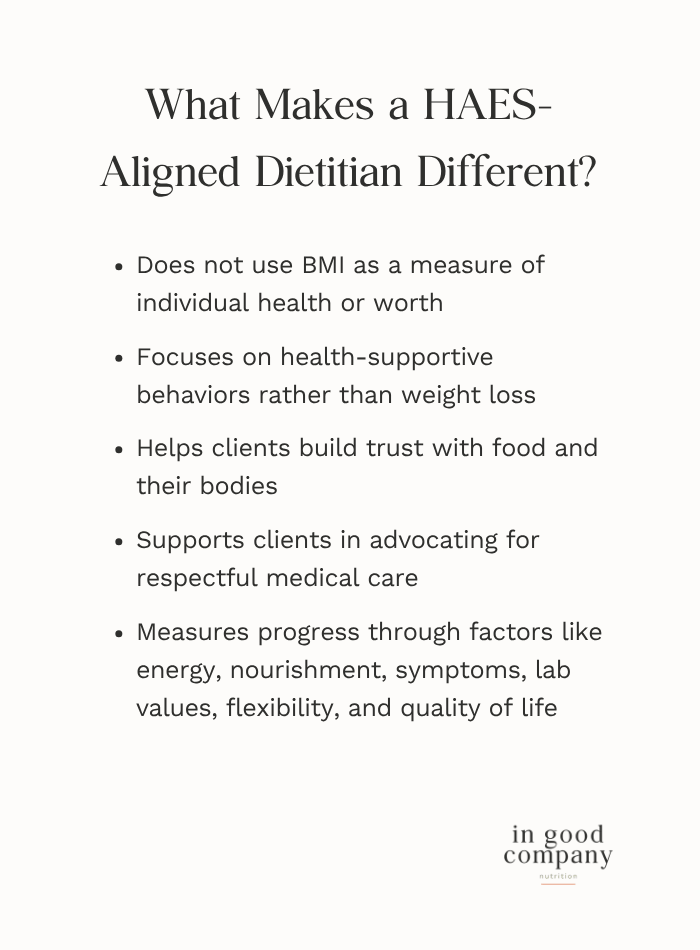
A HAES®-aligned nutritionist helps you explore food, nourishment, and health without making weight loss the goal. Rather than handing you rigid meal plans, calorie targets, or food rules, the work often centers around building trust with your body, learning what support actually feels sustainable, and understanding your needs with more compassion and nuance.
Depending on what brings you in, this might include support with:
healing from chronic dieting
eating disorder recovery
body image concerns
meal consistency and nourishment
ADHD- or neurodivergence-related food challenges
medical nutrition support from a weight-inclusive lens
reconnecting with hunger, fullness, and satisfaction
reducing stress and anxiety around food
Many people come into this work carrying the message that their body is the problem. They may have spent years trying to be “good,” following rules, starting over on Monday, or feeling blamed for health concerns. A HAES® approach gently challenges that narrative. Instead of asking, “How do we control your body?” we ask, “What would help you feel more nourished, supported, and cared for?”
What happens in the first session?
Your first appointment is usually an intake session. This is a chance for your dietitian to get to know you beyond symptoms, numbers, or a diagnosis. Understanding your story.
We might talk about things like:
your relationship with food now and how it has changed over time
whether food feels stressful, overwhelming, or all-consuming
your medical history and any symptoms that are affecting eating
your relationship with your body
your support system
barriers to nourishment such as time, money, energy, sensory issues, executive functioning, or access to food
what you are hoping to get out of nutrition counseling
The first session is often conversational. Many may get nervous about this, but you don’t need to have the “right” words or come up with a perfect timeline or explanation of struggles. You are allowed to be unsure, guarded, overwhelmed, or still figuring things out.
A HAES®-aligned dietitian should help create a space where you can move at a pace that feels manageable. The goal is to understand your patterns, your needs, and the context around eating so support can actually feel realistic.
What kinds of goals might you work on?
Goals in HAES®-aligned nutrition counseling are typically collaborative and individualized. They are built around supporting your wellbeing in ways that feel meaningful and attainable.
Some examples might sound like:
I want to feel less anxious around food
I want eating to feel more consistent and less chaotic
I want to understand my hunger cues better
I want to stop feeling trapped by food rules
I want to make peace with foods I have been avoiding
I want support with a medical condition without falling into dieting
I want movement to feel more connected and less punishing
Sometimes the work starts with very foundational goals, like remembering to eat earlier in the day, finding easier lunch options, or building a list of foods that feel safe and accessible. Sometimes it gets deeper, exploring shame, perfectionism, body grief, or the impact of past experiences on food and body trust.
What do ongoing sessions look like?
Follow-up sessions build on what comes up in the first appointment. Often, they begin with a check-in: what felt hard, what felt supportive, what you noticed, what got in the way, and what you want help with today.
From there, sessions may include:
problem-solving around meals, snacks, routines, or barriers
processing body image distress
exploring food rules and where they came from
supporting recovery from disordered eating
discussing medical nutrition needs without defaulting to weight stigma
practicing more flexibility, neutrality, and self-trust with food
creating structure that feels supportive rather than rigid
A HAES® nutritionist may draw from tools like intuitive eating, gentle nutrition, mindfulness, collaborative meal planning, body image work, and practical coping strategies. But none of these should be forced in a one-size-fits-all way. The work should adapt to you. Healing your relationship with food and body is rarely linear. There are often setbacks, ambivalence, fear, and grief along the way. A good nutrition counseling relationship makes space for all of that.
What a HAES® approach is not
It can also be helpful to name what this work usually is not.
Working with a HAES® nutritionist is generally not about:
prescribing intentional weight loss as the main goal
handing you restrictive food rules
labeling you “good” or “bad” based on what you eat
ignoring emotional, cultural, financial, or systemic factors
assuming health is fully within your control
reducing your worth or wellbeing to a number on a scale
That does not mean medical conditions are ignored. It means they are approached with more context, more respect, and less blame.
How do you know if a HAES® dietitian is a good fit?
Finding the right provider matters. You are allowed to ask questions and get a feel for whether someone’s approach aligns with your values and needs. The source text you shared suggests questions like asking about their approach to weight-inclusive care, how they support healing your relationship with food and body, how they use intuitive eating and HAES® principles, and how sessions are structured.
You might ask:
What does weight-inclusive care look like in your practice?
How do you support people with body image concerns or disordered eating?
How do you navigate medical nutrition therapy without centering weight loss?
What do sessions typically look like?
How collaborative is the process?
Do you work with clients who feel anxious, disconnected, or overwhelmed around food?
The right fit often feels less like being “fixed” and more like being met.
Final thoughts
Working with a HAES® nutritionist can offer a different path forward if you are tired of nutrition advice that feels rigid, shaming, or disconnected from real life. It can be a space to unpack old beliefs, care for your body with more gentleness, and build a relationship with food that feels more grounded and sustainable.
You don’t need to have everything figured out before reaching out. You just need a place to start.
You deserve nutrition care that sees the full picture, not just your body size. If you’re looking for a dietitian in Maryland, Pennsylvania, or Virginia, and are ready to explore a more supportive relationship with food and your body, you can reach out here.