
If you have ever asked yourself, “why am I not hungry in the morning?”, you are not alone. Many people wake up without much appetite and then feel confused or worried by messages that say breakfast is either mandatory or something you should only eat if you feel hungry.
From a gentle nutrition perspective, morning appetite is not about forcing food or waiting endlessly for hunger to appear. It is about understanding your body’s signals, supporting blood sugar, and creating a sense of safety around food, even when hunger cues are quiet.
Is It Normal to Not Feel Hungry in the Morning?
Not feeling hungry can be a common occurrence, especially for people who experience neurodiversity, chronic stress or anxiety, or a history of dieting or underfueling. However, not feeling hungry does not automatically mean your body does not benefit from eating in the morning. Hunger cues can be delayed, muted, or hard to recognize, particularly after long periods of ignoring or overriding them.
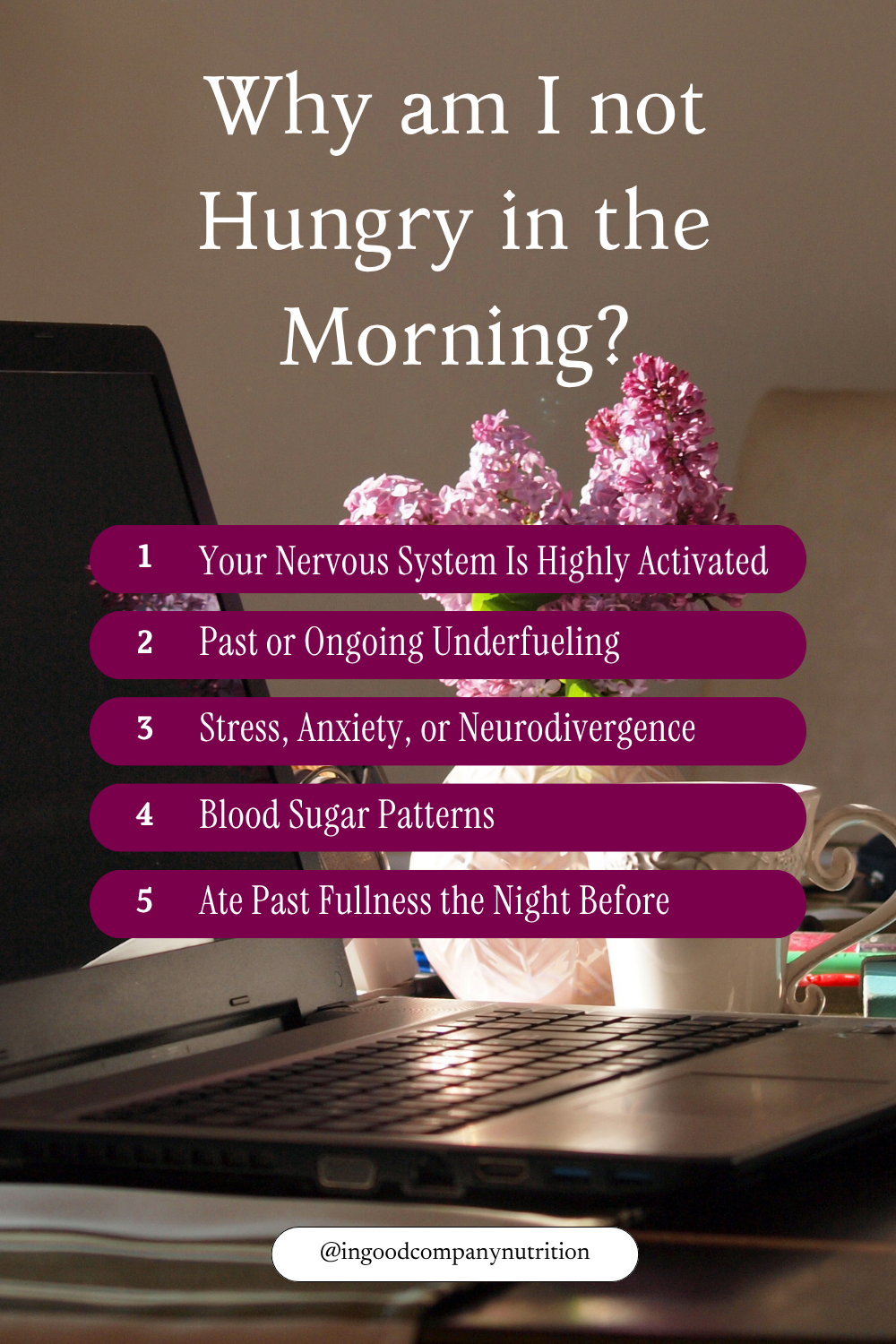
Why Am I Not Hungry in the Morning? Common Reasons
1. Your Nervous System Is Highly Activated
In the early morning hours, the body naturally releases cortisol to help you wake up and feel alert. This is a normal part of circadian rhythm regulation. For some people, especially those who are sensitive to stress, this cortisol rise can temporarily suppress appetite.
When the nervous system is activated, the body prioritizes alertness and readiness over digestion. Blood flow shifts away from the gastrointestinal system, and hunger cues may feel muted or absent. This can happen even if the body still needs fuel.
This pattern is especially common in people who:
Wake up feeling rushed or anxious
Have a busy or high-stress morning routine
Experience chronic stress or burnout
Have trauma histories or sensitive nervous systems
Not feeling hungry right when you wake up does not mean your body does not need nourishment. It often means your nervous system has not fully shifted into a state where digestion feels accessible yet. Gentle morning nourishment can help signal safety and support this transition over time.
2. Past or Ongoing Restriction
One of the most common and often overlooked reasons for not feeling hungry in the morning is past or current restriction, even if it does not look like dieting anymore. Restriction does not have to mean skipping meals on purpose or following a specific diet plan.
It can include:
Chronic undereating, even unintentionally
Delaying meals until hunger feels “strong enough”
Cutting back during stressful or busy periods
Avoiding certain foods out of fear, guilt, or rules
A history of dieting, weight cycling, or eating disorder behaviors
When the body experiences restriction, it adapts.
One of the first adaptations is blunting hunger cues, especially in the morning. From a physiological standpoint, this makes sense. If the body does not trust that food will be available consistently, it may reduce appetite signals to conserve energy and maintain basic functioning.

Morning hunger is often the first cue to go quiet.
Over time, this can look like:
Waking up with no appetite
Feeling nauseous or uninterested in food
Not thinking about eating until late morning or afternoon
Feeling suddenly very hungry later in the day
3. Stress, Anxiety, or Neurodivergence
Stress and anxiety can significantly impact appetite, particularly in the morning. When the body perceives stress, whether emotional, mental, or physiological, it often suppresses hunger as a protective response.
People with anxiety or neurodivergence may notice:
Feeling nauseous or unsettled rather than hungry
Feeling indifferent or avoidant toward food
Forgetting to eat or delaying meals unintentionally
Hunger arriving suddenly and intensely later in the day
Stimulant medications commonly used for ADHD can also blunt appetite early in the day. This does not mean the body does not need food. It means hunger signals may be less reliable and require additional support.
From an Intuitive Eating lens, this is where practical hunger becomes important. Eating within one to two hours of waking can help:
Reduce nervous system stress
Improve focus and emotional regulation
Prevent energy crashes later in the day
Make hunger cues easier to access over time
This is not about overriding your body. It is about supporting it when signals are quiet or inconsistent.
When eating feels harder than it should
If you regularly forget to eat, struggle to recognize hunger, or find yourself suddenly ravenous at night, you're not alone. Sometimes the issue isn't knowing what to eat. It's figuring out how to make eating work with your body, your brain, and your actual life.
I'm a registered dietitian who helps adults navigate ADHD, inconsistent eating, disordered eating, and complicated relationships with food. We can work on this together without more food rules or judgment.
4. Blood Sugar Patterns and Overnight Fasting
After several hours without eating overnight, the body relies on stored energy to maintain blood sugar. For some people, this process is smooth. For others, blood sugar regulation can feel less stable in the morning.
When blood sugar dips or fluctuates, hunger does not always show up as hunger. Instead, it may show up as:
Low energy or fatigue
Jitteriness or shakiness
Nausea
Brain fog or difficulty concentrating
In these cases, the body may prioritize stabilizing blood sugar before sending clear hunger cues. This can make it feel like you are not hungry, even though nourishment would be helpful.
Gentle morning eating can support blood sugar balance and often leads to clearer hunger signals later in the day. Over time, this consistency can reduce morning nausea and improve overall energy levels.
5. You Ate Past Fullness or Experienced a Binge the Night Before
Sometimes, not feeling hungry in the morning has less to do with something being wrong and more to do with what happened the night before. If you ate past fullness or experienced a binge, it makes sense that your body may not be sending strong hunger cues right away the next morning.
Digestion may still be ongoing, fullness may linger, and your body may simply need more time before appetite feels accessible again. In some cases, waking up without hunger after a binge can also come with guilt, self-judgment, or an urge to “make up for it” by skipping breakfast. That response is incredibly common, but it can also keep the binge-restrict cycle going.
From a gentle nutrition perspective, the goal is not to punish yourself or try to compensate. It is to get curious about what your body needs next. Sometimes that might mean waiting a little while and starting with something small or gentle. Other times, it might mean choosing practical nourishment even if hunger is not fully present yet, especially if you know restriction tends to lead to rebound hunger later in the day.
A night of eating past fullness does not mean you failed, and it does not mean you need to earn food the next day. Your body still deserves steadiness, compassion, and consistent nourishment.
What Morning Nourishment Can Look Like When Appetite Is Low
From a nutrition standpoint, I often recommend eating within about one to two hours of waking, even if hunger cues are subtle or absent.
This recommendation is not about rigid rules or forcing food. It is about:
Supporting blood sugar regulation
Helping the nervous system feel safe
Rebuilding trust in consistent nourishment
Allowing hunger cues to regulate naturally
Intuitive Eating includes honoring hunger when it is present and also caring for the body when hunger cues are unreliable. Waiting longer than two hours can sometimes reinforce appetite suppression and contribute to energy crashes or intense hunger later in the day. Morning nourishment does not need to be large or elaborate; it can be gentle. Some gentler options might be toast with butter, a smoothie, or a banana with peanut butter. Even small amounts of food can support regulation and hunger signal consistency to the body.
Your body is not broken. It is responding to its environment and history, and it deserves care rather than judgment. If a lack of morning appetite feels confusing, stressful, or connected to a complicated relationship with food, you do not have to navigate it alone.
I take a weight-inclusive, Intuitive Eating–aligned approach to nutrition. I help clients:
Rebuild trust with hunger and fullness cues
Support appetite without pressure or rigid rules
Navigate morning eating with anxiety, ADHD, or GI concerns
Heal from past dieting or disordered eating patterns
Nutrition support should feel collaborative, compassionate, and tailored to your real life. If you are ready for guidance that meets you where you are, you can learn more about working with me or schedule an appointment.

-
Yes. It is common to wake up with low appetite, especially if you have chronic stress or anxiety, ADHD or other neurodivergence, GI discomfort, or a history of dieting, restriction, or underfueling. Low morning hunger does not automatically mean your body does not benefit from gentle morning nourishment.
-
In the morning, cortisol naturally rises to help you wake up. If your nervous system is already running “on high,” that stress response can temporarily suppress appetite and make digestion feel less accessible. You might notice nausea, jitters, or “no interest” in food even when your body would do well with fuel.
-
Absolutely. When the body has learned that food is inconsistent or delayed, hunger cues can become quieter, especially in the morning. This can show up as no appetite at wake-up, feeling nauseous around breakfast, then getting very hungry later in the day. Rebuilding consistency can help hunger cues return over time.
-
Think “gentle and doable,” not a perfect breakfast. Aim for something small within 1–2 hours of waking to support blood sugar and regulation, like toast with butter, a smoothie, or a banana with peanut butter. If nausea is present, start with a few bites or sips and build gradually as your body feels safer with morning intake.
